 Gardeners Chelsea Health and Safety Policy
Purpose: This Health and Safety policy sets out the commitment of Gardeners Chelsea and associated Chelsea gardening services teams to protect staff, clients, contractors and the public while delivering high-quality garden care. The policy applies to all Chelsea gardeners, seasonal workers, volunteers and subcontractors engaged in landscape maintenance, planting, pruning and garden construction. It is designed to promote safe working practices, reduce incidents and ensure that service delivery meets recognised standards for garden safety and environmental responsibility.
Scope and Objectives
The policy covers risk assessment, safe use of equipment, manual handling, use of chemicals, control of hazardous vegetation, traffic and pedestrian safety on site, and environmental protection measures relevant to Gardeners in Chelsea and neighbouring service areas. Our objectives are to:
- Prevent workplace injuries and ill health,
- Provide clear safety roles and responsibilities,
- Ensure effective training and competence,
- Maintain safe plant, tools and personal protective equipment (PPE).
 Responsibilities and Roles
All employees and contractors share responsibility for safety. Management will lead by example and provide resources, supervision and regular review. Supervisors and team leaders must carry out site-specific risk assessments and ensure that Chelsea garden care activities are planned to eliminate or control hazards. Employees are required to follow procedures, report hazards without delay and participate in training. Key responsibilities include:
- Carry out pre-start checks of equipment and PPE;
- Follow safe systems of work for tasks such as tree work, hedge trimming and machinery operation;
- Report incidents, near misses and unsafe conditions;
- Use COSHH-aware procedures for herbicides, pesticides and fuels, ensuring correct storage and disposal.
Risk assessment and control are fundamental. Before any job begins, a documented assessment must identify hazards and assign control measures proportionate to the risk. Controls follow the hierarchy: eliminate, substitute, engineer, administer and use PPE. Examples include substituting hand tools for noisy machinery where possible, isolating traffic with barriers and signage, and scheduling noisy operations to minimise public disturbance.
 Working safely with tools and machinery: All equipment, from strimmers and chainsaws to ride-on mowers and shredders, must be maintained to manufacturer standards and inspected before use. Operators must be trained and certified where required. Equipment guards, dead-man switches and emergency stops must be functional. Fuel and battery storage should be secure and ventilated to reduce fire risk. Regular maintenance records and a site logbook help demonstrate compliance and support safe operations.
Training and competence: A robust induction and ongoing training programme ensures that new and experienced crew members understand best practice for garden safety. Training covers:
- Manual handling and ergonomic techniques to prevent musculoskeletal injury;
- Safe operation of petrol and battery-powered tools;
- Awareness of plant, insect and allergen hazards typical of Chelsea garden work;
- First aid, incident reporting and emergency procedures.
Personal Protective Equipment (PPE) must be provided and used where required. Typical PPE for Gardeners Chelsea teams includes high-visibility clothing, eye and ear protection, gloves, steel-toe boots and chainsaw chaps when applicable. PPE is a last line of defence and should complement other control measures.
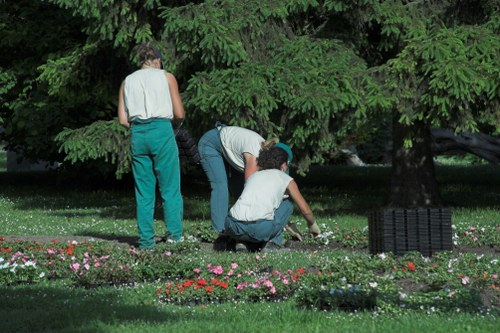 Hazardous substances and environmental controls: The safe handling of chemicals used in garden maintenance is essential. All pesticide, fertiliser and solvent use will follow manufacturer instructions and safe application standards. Storage areas must be secure, labelled and ventilated. Spill kits are to be available on site and staff trained in spill response. Waste materials, green refuse and chemical containers will be disposed of responsibly to reduce environmental impact and public health risk.
Emergency preparedness and reporting: Teams must have a clear plan for medical emergencies, severe weather and other unexpected events. First aid kits and trained first aiders should be present on site. Incidents and near-misses must be recorded, investigated and learned from, with outcomes used to improve procedures and prevent recurrence.
Monitoring, Review and Continuous Improvement
The policy will be reviewed at regular intervals and after any significant incident, change in operations or regulatory update. Periodic site inspections, toolbox talks and audits will monitor compliance and identify opportunities for safer, more efficient practices. Management is committed to providing resources for continual improvement so that Chelsea gardening services remain safe, lawful and trusted by clients.
Communication and worker engagement
Effective safety communication is essential. Team briefings, written procedures and clear signage help ensure everyone understands current risks and control measures. Workers are encouraged to contribute ideas for safer working methods and to speak up if they believe an activity is unsafe. Engagement promotes a positive safety culture across all Gardeners in Chelsea operations.Implementation: This policy is supported by documented procedures, training records, maintenance logs and risk assessments. Managers must ensure the policy is accessible, understood and implemented at every site. By adhering to these principles, Gardeners Chelsea aims to deliver excellent garden care while protecting the health and safety of employees, clients and the public.

